

RideSaddle-Free
For urologists: A radiologist's summary of the evidence on Bicycle Saddle Diseases (BSDs), plus a free BSD information pack for the cyclists in your practice.
The hidden danger of
traditional saddles
Bicycle Saddle Diseases are conditions caused by sustained perineal compression, repetitive trauma, and ischemia from standard saddle use. In the upright position, the pudendal nerves and arteries bear body weight. MRI confirms compression of perineal vessels under saddle load, regardless of saddle design.3
No randomized controlled trials exist for BSDs, and most studies survey active cyclists, a design that can miss riders who developed symptoms and stopped. Read through the Bradford Hill criteria (dose-response, biological plausibility, consistency), the pattern is hard to dismiss.
What the literature documents
Erectile dysfunction
2.0× odds vs. non-cyclists, controlling for age and comorbidities (meta-analysis).4
Prostate cancer
OR 6.1 in men over 50 riding more than 8.5 hrs/week, within a significant dose-response trend.6
Urethral strictures
2.5× odds vs. swimmers and runners.8
Infertility
1.9× odds of low sperm concentration and 2.1× odds of low total motile count at 5+ hrs/week.10
Vulvar pain & numbness
69% report genital pain and 58% numbness.13 Numbness odds of 6.5× (low intensity) and 9.1× (high intensity) vs. non-cyclists.14
Sexual dysfunction
Genital pain within the first hour of a ride was the strongest predictor of FSD (aOR 12.6).13
Labial swelling & fibrosis
Chronic labial lymphedema and fibrosis, documented in multiple case series. 35% of Dutch club cyclists reported vulval swelling.16,17,18
Recurrent UTIs
1.4× odds vs. non-cyclists.14
Saddle sores
Second most common illness in a year-long prospective study of professional cyclists.24
Folliculitis & furunculosis
Perineal skin infection directly attributed to cycling in the clinical literature.22
Perineal nodular induration
The fibroblastic pseudotumor known as "biker's nodule," reported almost exclusively in male cyclists.23
Traditional fixes don't work
None of these approaches address the core problem: a large portion of rider weight resting directly on the perineum.
Better saddle fit
Professional fitting optimizes saddle position but cannot eliminate perineal weight transfer. The fundamental geometry of an upright saddle puts bodyweight on the wrong anatomy.
Cutout saddles
In oximetry testing, central-cutout saddles showed no significant difference in penile oxygen pressure vs. standard designs.1 MRI shows perineal vessel compression under load regardless of saddle design.3
Padded shorts
Chamois padding reduces friction and abrasion. It does not reduce compression on the arteries and nerves beneath it.
The uncomfortable truth
See the full research
Every figure on this page comes from peer-reviewed studies, numbered to match Dr. Parker's 24-reference research summary, with study design and limitations noted. Read the complete summary here.
Recumbent bicycles support the rider's weight on the back and buttocks instead of the perineum. In the reclined position, the drop in penile oxygen seen on upright saddles does not occur.2 For patients who want to keep cycling, recumbent positioning is the intervention with the best mechanistic evidence for BSD prevention. Cruzbike recumbents pair that position with front-wheel-drive performance, efficient climbing, and real road handling, so patients keep every cardiovascular and mental health benefit cycling offers.
Request your free
BSD information pack
For US urology practices. We'll email the digital research summary right away and mail patient brochures to your office.
Patient brochures
The Ride Saddle-Free brochure, written for the cyclists in your practice. Choose how many you'd like.
Digital research summary
The full 24-reference summary, with mechanism, study design, and clinical notes for each condition. Emailed when you sign up, ready to read, print, or forward to a colleague.
Your pack is on its way
The digital research summary is headed to your inbox now, and your patient brochures will follow by mail. If you'd like to start reading, the summary is also available here.
Three ways to ride saddle-free
Every Cruzbike supports the rider on the back and buttocks, with no weight on the perineum. Each of these models is covered by the 100 Mile Trial, so your patients can try one without financial risk.
Love it or get a full refund & free return shipping.
We're confident you'll love your bike. After you've ridden it for at least 100 miles in 100 days, if you don't love it, we'll give you a full refund on the bike — including return shipping on us.
For full details and instructions on how to begin a 100 Mile Trial return, visit our Return and Refund Policy page →
Our 100 Mile Trial applies to: new, full-price, complete T50, A4x, or S40 Cruzbikes purchased from Cruzbike.com by first-time Cruzbike owners in the contiguous United States only. For a full refund, your Cruzbike must be carefully disassembled and re-packaged in its original box according to the video instructions we provide.
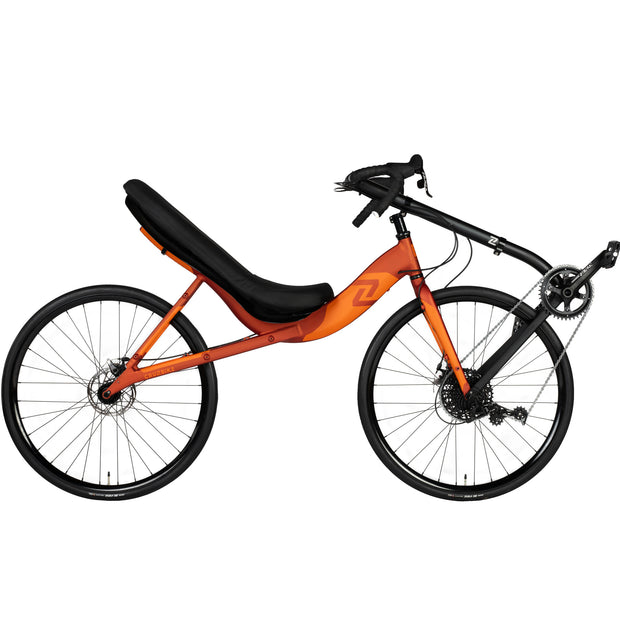
S40 Complete Gen 6
The endurance road bike. Ride farther, train longer — front-wheel-drive performance with zero saddle pressure.
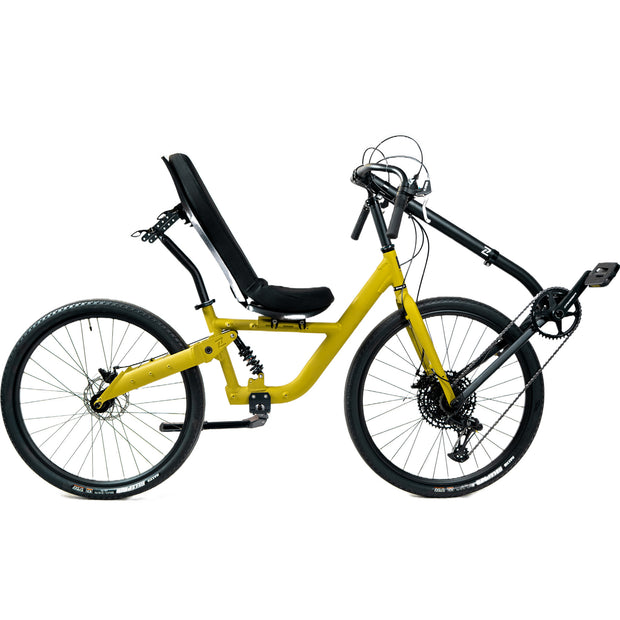
A4x Complete Gen 1
The adventure touring recumbent. Dual-position suspension, rack-ready versatility, and front-wheel-drive power for any terrain.
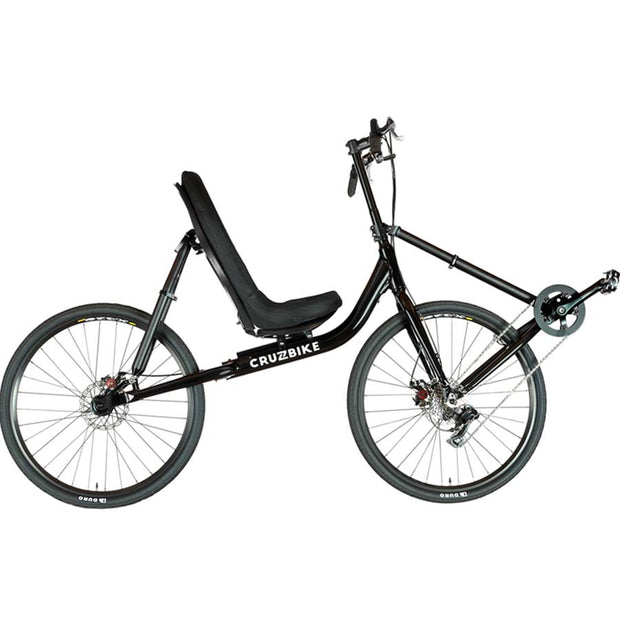
T50 Gen 3 Complete
The accessible cruiser. Simple, elegant, and delightfully affordable — the hop-on-and-go Cruzbike, rack-ready from day one.
Give your cycling patients another option.
Most cyclists with BSDs are told to ride less or stop. There's a third choice: keep riding, without the saddle.
Write to Dr. Parker
Whether it's study design, the mechanism, or how the bikes work, Dr. Parker reads and answers physician emails personally.
Direct to Jim.
Your email goes to him, not a sales team.
Hard questions welcome.
Ask about sources, methodology, or anything on this page.
Numbering matches the full BSD research summary, which includes all 24 references.
- 1Cohen JD, Gross MT. Effect of bicycle racing saddle design on transcutaneous penile oxygen pressure. J Sports Med Phys Fitness. 2005;45(4):409-418.
- 2Sommer F, Schwarzer U, Klotz T, et al. Erectile dysfunction in cyclists: is there any difference in penile blood flow during cycling in an upright versus a reclining position? Eur Urol. 2001;39(6):720-723.
- 3Bressel E, Reeve T, Parker D, Cronin J. Influence of bicycle seat pressure on compression of the perineum: a MRI analysis. J Biomech. 2007;40(1):198-202.
- 4Gan ZS, Ehlers ME, Lin FC, et al. Systematic review and meta-analysis of cycling and erectile dysfunction. Sex Med Rev. 2021;9(2):304-311.
- 6Hollingworth M, Harper A, Hamer M. An observational study of erectile dysfunction, infertility, and prostate cancer in regular cyclists: Cycling for Health UK study. J Mens Health. 2014;11(2):75-79.
- 8Awad MA, Gaither TW, Murphy GP, et al. Cycling and its relationship to urinary and sexual health: results from a large, multinational, cross-sectional study. J Urol. 2018;199(2):798-804.
- 10Wise LA, Cramer DW, Hornstein MD, et al. Physical activity and semen quality among men attending an infertility clinic. Fertil Steril. 2011;95(3):1025-1030.
- 13Greenberg DR, Khandwala YS, Breyer BN, et al. Genital pain and numbness and female sexual dysfunction in adult bicyclists. J Sex Med. 2019;16(9):1381-1389.
- 14Gaither TW, Awad MA, Murphy GP, et al. Cycling and female sexual and urinary function: results from a large, multinational, cross-sectional study. J Sex Med. 2018;15(4):510-518.
- 16Baeyens L, Vermeersch E, Bourgeois P. Bicyclist's vulva: observational study. BMJ. 2002;325(7356):138-139.
- 17Coutant-Foulc P, Lewis FM, Berville S, et al. Unilateral vulval swelling in cyclists: a report of 8 cases. J Low Genit Tract Dis. 2014;18(4):e84-e89.
- 18Hermans TJN, Wijn RPWF, Winkens B, Van Kerrebroeck PEVA. Urogenital and sexual complaints in female club cyclists: a cross-sectional study. J Sex Med. 2016;13(1):40-45.
- 22Mellion MB. Common cycling injuries: management and prevention. Sports Med. 1991;11(1):52-70.
- 23Khedaoui R, Martín-Fragueiro LM, Tardío JC. Perineal nodular induration ("biker's nodule"). Int J Surg Pathol. 2012;21(1):71-75.
- 24Fallon T, Nolan R, Peters J, Heron N. "Beyond the finish line": the epidemiology of injury and illness in professional cycling. Sports (Basel). 2025;13(1):20.